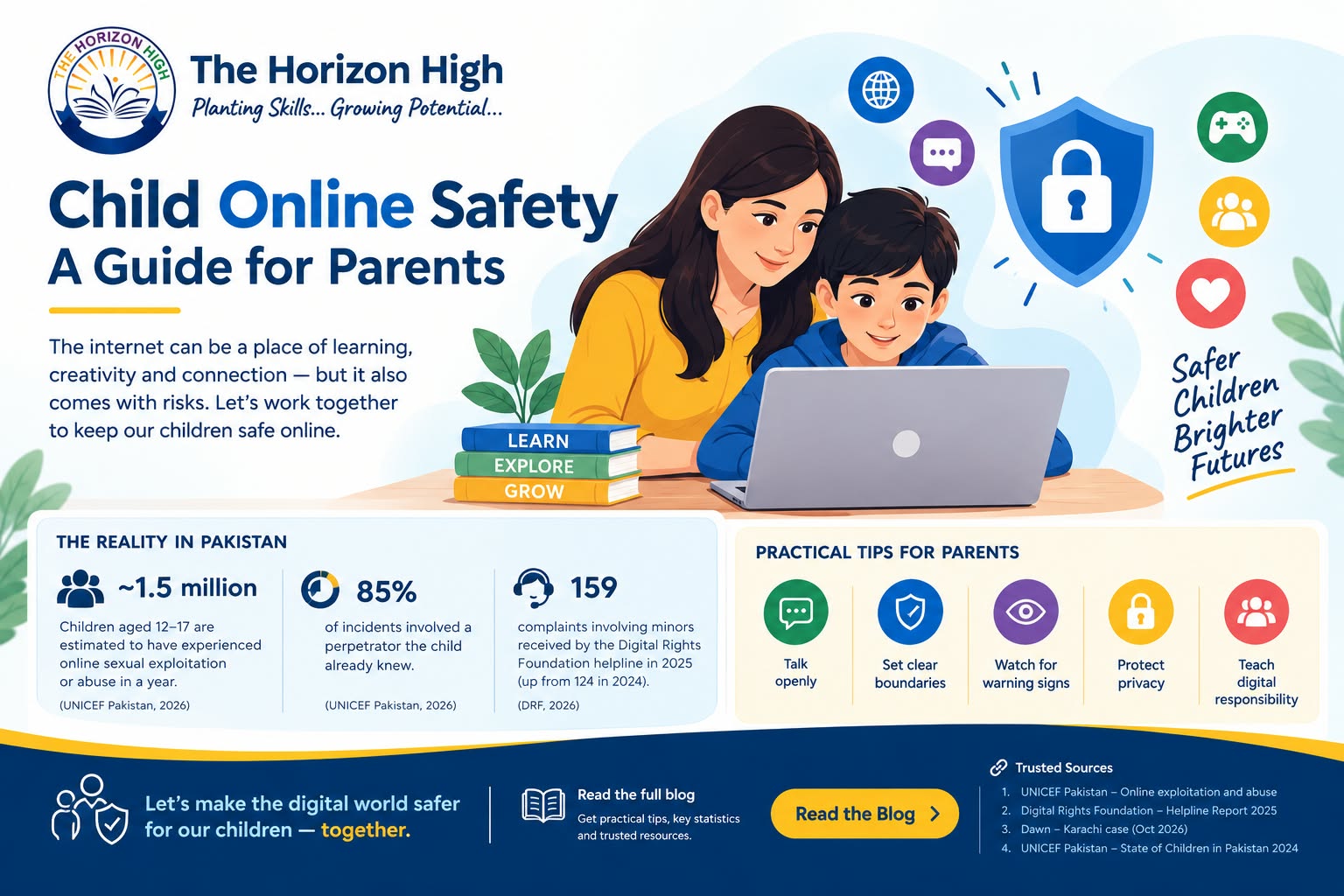
The internet can open doors to learning, creativity and connection. Helping children use it safely starts with awareness, open conversations and clear boundaries. This guide is for parents and caregivers in Pakistan.
- Keep conversations open
- Build healthy boundaries
- Know where to get help
Why online safety matters
Children deserve to explore the digital world without fear. Research in Pakistan highlights why families need to stay informed, listen without judgment and know where to turn for help.
Children aged 12 to 17 in Pakistan were estimated to have experienced at least one form of technology-facilitated sexual exploitation or abuse in a year.
UNICEF Pakistan, 2026Of incidents in the UNICEF study involved someone the child already knew.
UNICEF Pakistan, 2026Complaints involving minors received by the Digital Rights Foundation helpline in 2025, compared with 124 in 2024.
DRF helpline report, 2025These figures describe specific studies and helpline reports. They should not be read as a count of every online-safety incident in Pakistan.
Online risks to understand
A child may not always recognise when an online interaction becomes unsafe. Talk about these risks in calm, age-appropriate language.
Cyberbullying
Repeated hurtful messages, humiliation, threats or exclusion through games, chats or social platforms.
Manipulation and grooming
Someone may build trust, ask for secrecy, request private images or try to move a child into private conversations.
Privacy and scams
Oversharing personal details, passwords, school information or live location can create avoidable risks.
Unsafe gaming and chats
Online games can connect children with strangers who may use pressure, gifts or threats to gain trust.
Disturbing content
Children may encounter frightening, violent or age-inappropriate material unexpectedly.
Unhealthy digital habits
Late-night use or constant notifications may affect sleep, focus, schoolwork and family time.
6 ways to help keep your child safe online
Safety is not just about restrictions. Children are more likely to seek help when adults stay approachable and involved.
Talk openly and regularly
Ask what your child enjoys online, who they talk to and whether anything has made them uncomfortable. Listen calmly before reacting.
Agree on clear boundaries
Set age-appropriate rules for screen time, apps, gaming, new contacts and device use at night. Explain the reasons behind them.
Protect personal information
Teach children not to share passwords, home addresses, school details, private photos or live location with strangers.
Review privacy settings together
Check account visibility, messaging permissions, location sharing and parental controls on the apps and devices they use.
Notice changes without jumping to conclusions
Sudden secrecy, distress after using a device, withdrawal or fear may mean a child needs support. Ask gently and avoid assumptions.
Make asking for help safe
Tell your child they will not be blamed for reporting a mistake, an uncomfortable message or an unsafe interaction.
If something goes wrong, stay calm
A supportive response can help protect the child and preserve information that may be needed later.
1. Listen and reassure
Thank the child for telling you. Make clear that their safety matters and that they are not to blame for someone else's harmful behaviour.
2. Preserve evidence safely
Keep relevant messages, usernames, dates and screenshots if safe to do so. Do not forward intimate images of a child or repost harmful content.
3. Block, report and seek help
Use the platform's reporting tools, review account security and contact the appropriate authorities if there are threats, exploitation or immediate danger.
Where to get help in Pakistan
Use official reporting channels and share only the information needed to report the concern.
- National Cyber Crime Investigation Agency (NCCIA): Submit a complaint online or visit the official office directory.
- NCCIA guidance: Read the official FAQs for complaint-related information.
- Immediate danger: If a child faces an imminent physical threat or risk of self-harm, stay with them and contact local emergency services or a qualified professional immediately.
Let's make the digital world safer for children.
Keep the conversation open, stay informed and work together to build healthier digital habits at home and at school.
Watch: a real case from Karachi
News coverage of a recent case in which the NCCIA stepped in to protect a 13-year-old girl. It shows why open conversations at home matter.
Trusted sources
The original research and official guidance behind this article.
The information on this page is for awareness and education. It is not a substitute for professional, legal or emergency advice.